I’m a firmware engineer from India. I build software for drones and robots: the code that keeps them flying safely, and tools that let AI control them.
I work at Airbotix, a drone company in Gurugram, where I write drone firmware and a ground station that flies many drones at once. Outside work I contribute to ArduPilot, the open-source autopilot, and build my own robots, like Rocky in the video.
Next, I’d like to join an early-stage robotics startup and work on robots and physical AI.
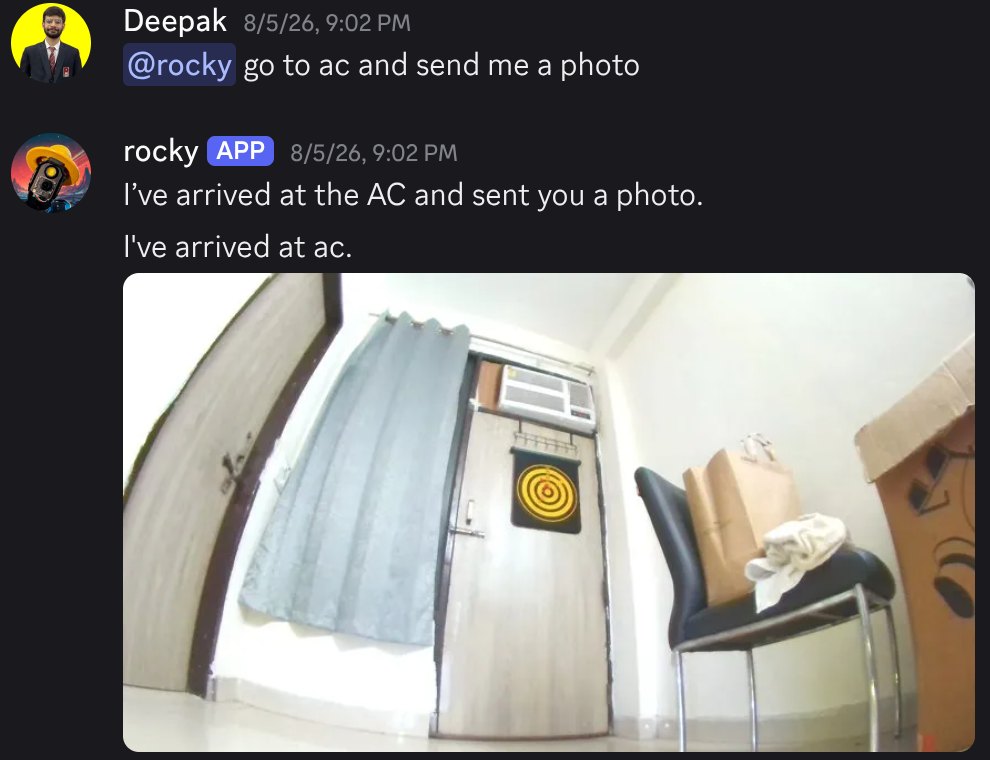
A robot that lives in my room and does tasks you give it. It can drive itself to places in the room, talk with you live, look through its camera and remember past conversations. It runs ROS 2 on a Raspberry Pi 5 and is built with Cyberwave.
NavigationIt mapped the room with its lidar and drives to saved places, like the 3D printer, using Nav2.
Live voiceIt talks with you in real time through the Gemini Live API. Say “hey Rocky” to wake it up.
CameraIt can look around with its pan and tilt camera and tell you what it sees.
MemoryWhen you ask it to dream, the day’s conversations go through a Cyberwave workflow to a bigger model, which picks out what matters. Rocky saves these as facts and events it can recall later.
Waveshare UGV rover base, Raspberry Pi 5, D500 lidar, a pan and tilt camera, two microphones and a speaker.
An MCP server that lets an AI agent like Claude or Codex fly a drone running ArduPilot. You describe a mission in plain English, and the agent plans the route, flies it, uses the camera and decides what to do next.
Works with Claude Code, Codex and local models through Ollama.
Nineteen tools for flying and reading telemetry: arm, take off, go to a point, orbit, land, return home and more.
Built-in safety checks: it leaves the drone’s fence, failsafe and arming settings untouched.
Many drones carry a second computer for things like vision and navigation. If it crashes or freezes mid-flight, the drone usually doesn’t notice. This watches that computer and, if it stops responding, warns the pilot, brings the drone home or lands it.
Drag to rotate
How it works
Flight controllerA Cube Orange running ArduPilot. The failsafe logic I wrote runs here.
Companion computerA Raspberry Pi 4 running a small service that reports its own health.
Health messageOnce a second, the Pi sends its CPU, memory, temperature, disk use and which services are running.
If it stopsThe flight controller warns the pilot, returns home or lands, depending on how it is set up. If the Pi is just busy, it only warns.
The failsafe in the simulator↗The companion service is stopped mid-flight, and the drone returns home after a five-second timeout.
Firmware engineer, June 2025 to now, Gurugram. I work on firmware and the ground station for Airbotix’s 1,000+ drone show fleet.
Built the testing software that cut checks from 8 to 10 minutes per drone to under 2.
Made the drones safer with parameter locking, firmware integrity checks and STM32 readout protection.
Fixed flight problems through PID tuning, vibration and log analysis.
Built ground station and camera-control software for a defence UAV project.
Exobot Dynamics
Robotics engineer intern, November 2024 to January 2025. I added PID motor control with encoder feedback to a bionic arm, and built tools to plot the motor data so tuning was faster.
IIT Guwahati
Summer research intern, June to July 2024. I wrote the mission software for a drone that checks airport runways for debris.
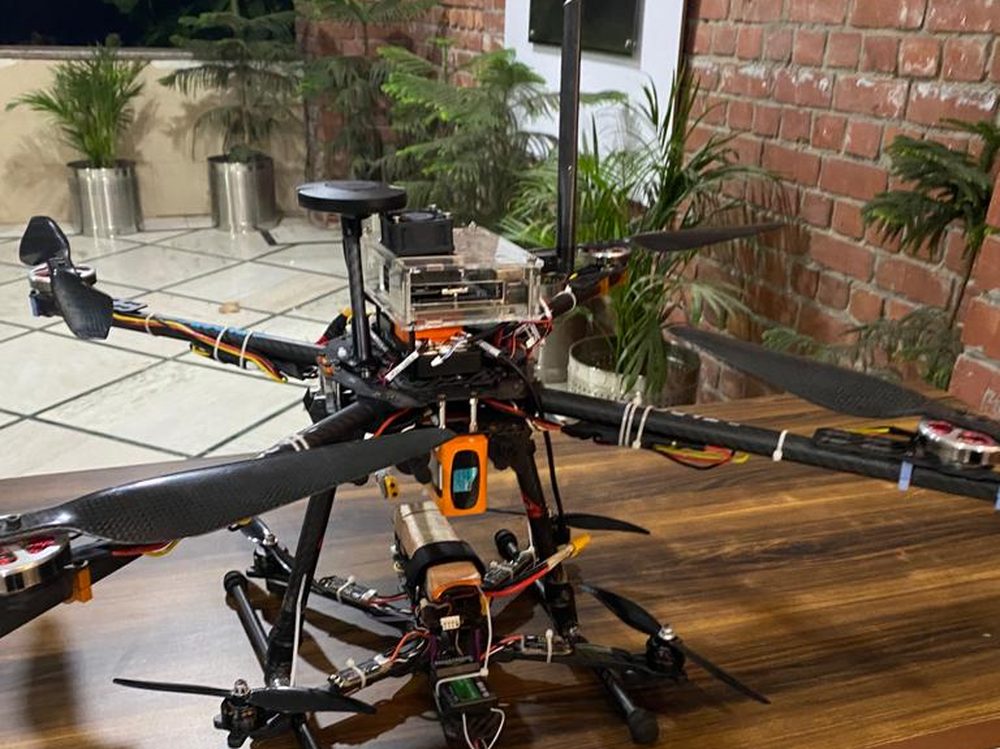
A drone I built, with a Cube Orange and a Jetson Nano.
Tools I use most: C++, Python, ROS 2, MAVLink, ArduPilot, STM32 and Linux.
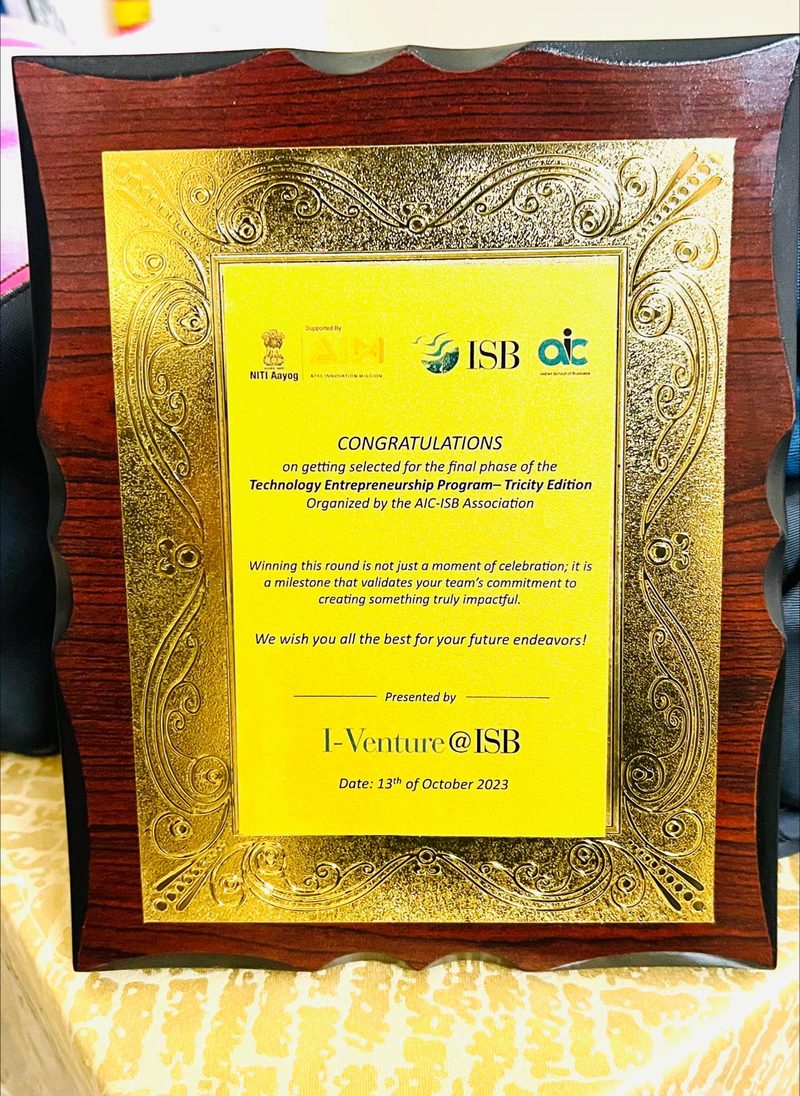
Technology Entrepreneurship Programfinal phase, I-Venture at ISB, 2023
Zeenovato, 2nd placehackathon, Chandigarh University
More competitions
Wins
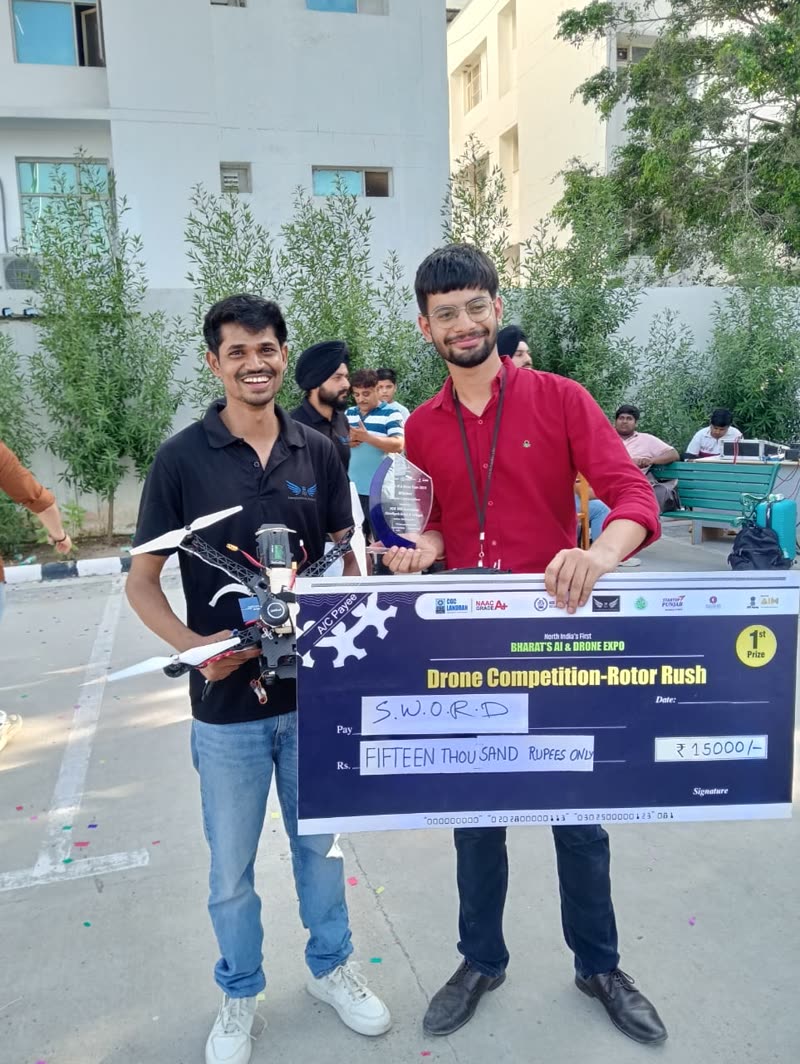
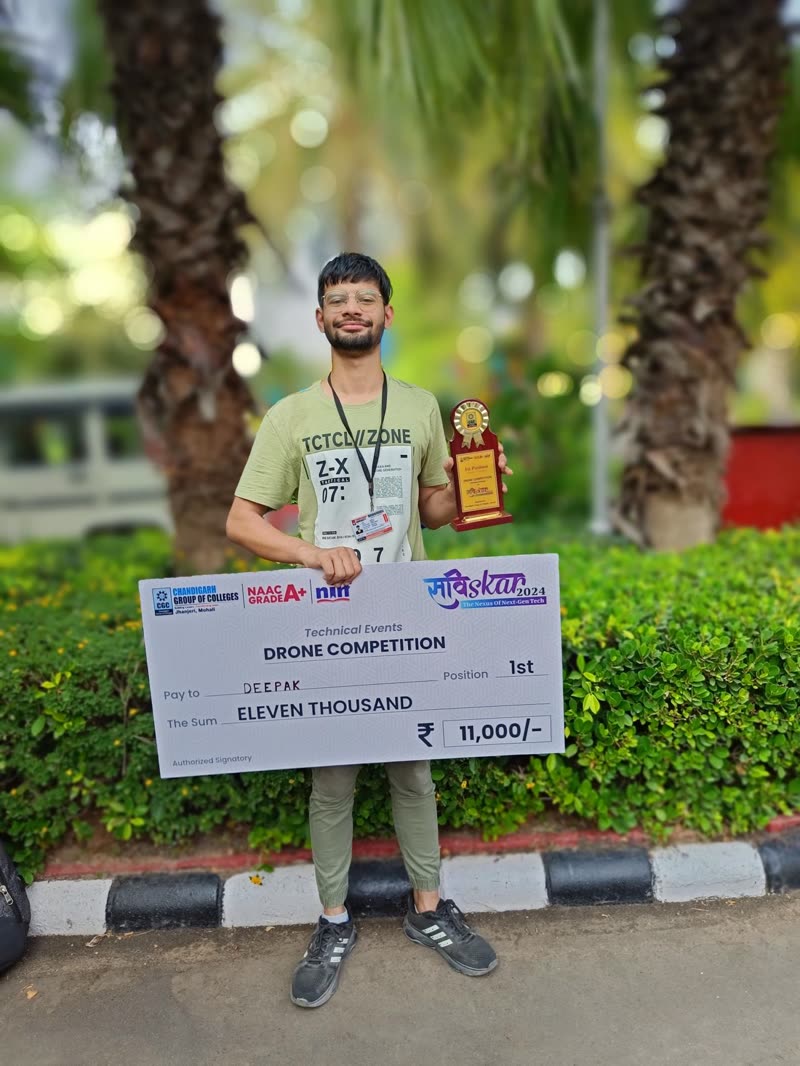
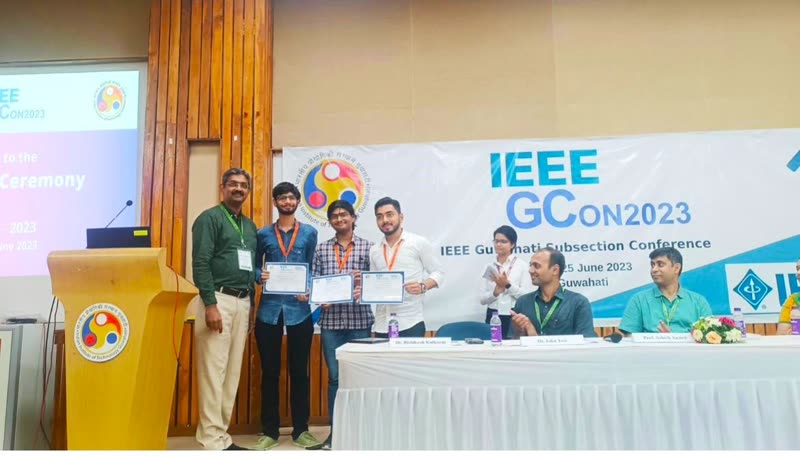
First at GCON Vegathon, IIT Guwahati, where we built the RISC-V flight controller that was later patented. First at the CGC Landran drone competition, and winner of Kraf Think 2025 at Chandigarh University.
KONOSUBA
An underwater robot our team designed for ROBOFEST-Gujarat 3.0. The idea cleared the first round and was recommended for a ₹50,000 prize.